How to Get Rid of Bed Bugs
If you are trying to figure out how to get rid of bed bugs, the good news is that our DIY method can start for less than $25, but only if you do it the right way. Most failures happen because people rush the prep work, miss hiding spots, or skip the follow up treatment after eggs hatch, so the real fix is a careful plan that you repeat until the bugs are truly gone.
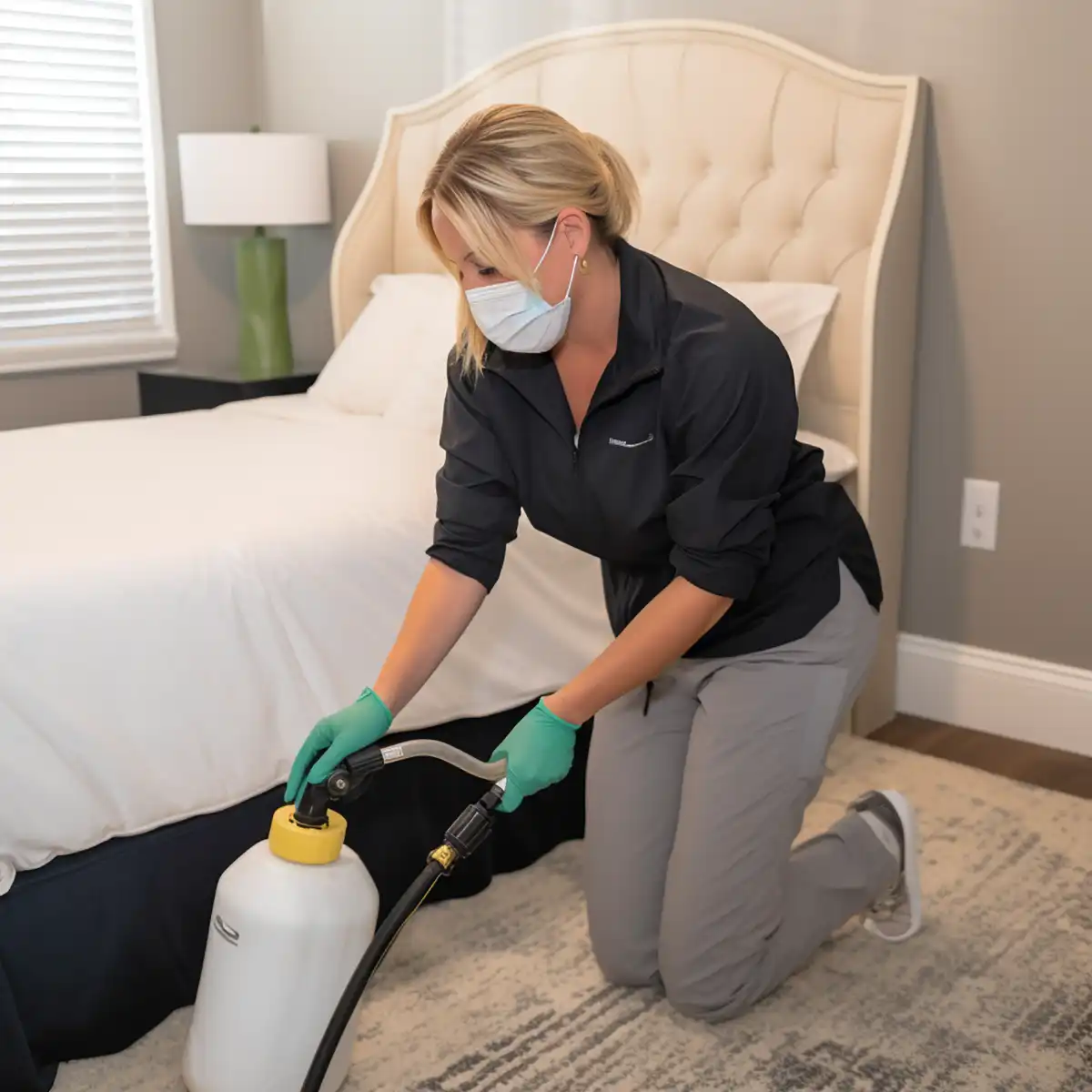
Woman eliminating bed bugs in an infested bedroom.
1. Prepare for Treatment
Preparation is the part most people try to rush, and it is one of the biggest reasons bed bug treatment fails. Whether you do this yourself or hire a professional, you still need to reduce clutter, bag items, wash and dry what can handle heat, vacuum carefully, and open up the places where bed bugs hide. The more thorough you are now, the easier it is to treat the room properly and tell whether the bugs are really gone.
Preparation is one of the five things many pest control companies don’t tell you about up-front.
Before you treat anything, work through this checklist from top to bottom.
Pre-Treatment Preparation Checklist
- All mattresses and box springs should be stood upright against the wall so every side can be inspected and treated.
- Take apart the bed frame, remove the headboard, and place those pieces against the wall.
- Clear shelves and other flat surfaces so there are fewer hiding spots.
- Remove clothing and place it in sealed plastic bags. Separate washable items from items that need dry cleaning before you move them.
- Take non-washable clothing to the dry cleaner and let them know the items may have bed bugs. Ask them not to reuse the bags.
- Empty all dresser and nightstand drawers, then remove the drawers so the joints and inside corners can be treated.
- Put cleaned or treated items in fresh sealed bags and keep them in an area that does not need treatment.
- Place sofas on their sides so the underside and frame can be reached.
- Do not move furniture into another room unless you are certain it is free of bed bugs. That is one of the fastest ways to spread the infestation.
- If you are comfortable doing it safely, remove electrical wall plates and unplug nearby items. If not, leave that step to a professional.
- Remove items from closet floors and place them in sealed bags until they can be cleaned or treated.
- Pick up loose items from the floor and move them about 12 inches away from the baseboards, including toys, basement items, and attic storage. Bag washable items first.
- Remove paintings, mirrors, and other wall hangings so wall edges and cracks can be inspected.
- Remove sheets, blankets, pillowcases, mattress covers, and similar bedding from every bed. Wash them, then dry them on high heat for at least 30 minutes if the fabric can handle it. Wash or dry clean pillows, then seal everything in fresh bags until treatment is finished.
- If you use a laundromat, keep everything sealed until it goes into the washer or dryer so you do not spread bed bugs on the way.
- Vacuum floors, baseboards, drapes, closets, shelves, and drawers carefully. When you finish, seal the vacuum contents in a bag and place it in an outdoor trash container right away.
2. Eliminate Bed Bugs
This is the step where you treat the hiding places, not just the places you can see. Bed bugs stay tucked into mattress seams, bed frames, screw holes, furniture joints, baseboards, and small wall cracks, so a quick spray around the room rarely solves the problem.
A low cost option many people use is bed bug dust. Desiccant dusts work by damaging the bug’s protective outer layer so it dries out over time, and bed bugs do not build resistance to them the way they can with some pesticides. Use only a product that is registered and labeled for bed bug control, follow the label carefully, and keep applications light and limited to cracks and crevices. Do not use food grade or pool grade diatomaceous earth, and do not spread dust where people can easily breathe it in.
See our bed bug inspection checklist before you apply anything. This is where people miss the bugs. If you skip common hiding spots like baseboard gaps, outlet areas, screw heads, and the folds of furniture, you can think the treatment worked when the infestation is really just hiding nearby.
3. Repeat Treatment
This is where many people lose progress. A treatment can kill live bed bugs and still leave eggs behind, so if you stop after one round, the infestation can start right back up.
Check the room carefully every few days after treatment and pay attention to the same hiding spots you treated the first time. If you still see live bugs, fresh spotting, shed skins, or other signs of activity, assume the job is not finished yet. Follow the product label for retreatment timing, and remember that some products, especially drying agents, do not work instantly.
The people who succeed are usually the ones who stay patient and repeat the process thoroughly instead of assuming the first treatment solved everything. We have seen this pattern again and again in visitor stories. The first round knocks the infestation down, but the follow up is what usually finishes it.
4. Make sure they don’t come back
Once the bed bugs are gone, the job shifts from treatment to prevention. Bed bugs are good at hitchhiking, so reintroduction often happens through luggage, secondhand furniture, shared laundry areas, or repeated exposure to the same source.
One of the simplest protections is a full mattress encasement that seals completely and stays in good shape. It will not solve an active infestation by itself, but it removes hiding spots and makes it easier to see new activity early. Check it now and then for tears, holes, or zipper gaps.
It also helps to keep clutter down, vacuum regularly, and stay cautious with anything that comes into the home from outside. Inspect used furniture before bringing it in, keep travel luggage off beds and floors when possible, and unpack washable items straight into the laundry after a trip.
If you think you know where the bed bugs came from, pay attention to that source. The fastest way to end up back at the beginning is to finish treatment at home and keep bringing the bugs back in.