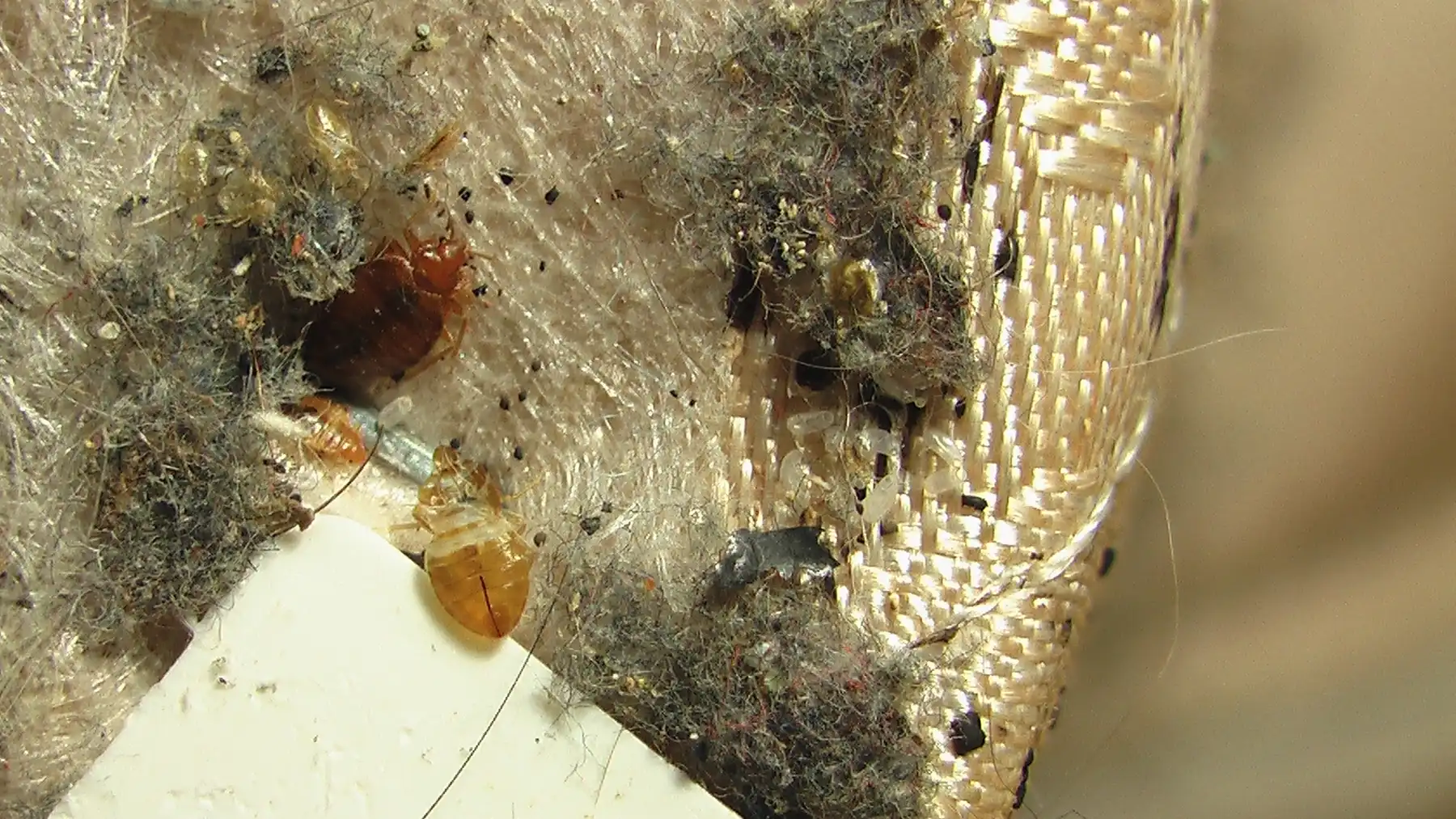
Bed Bug Inspection Checklist: Where to Look First
This bed bug inspection checklist shows you where to look first, what signs matter most, and how to inspect the places bed bugs are most likely to hide. Use it as a practical room by room guide so you can confirm the problem quickly and know what to do next if you find evidence of an infestation.
In the bedroom image below, the numbered points show the places bed bugs are most often found first. Start with the bed and the items closest to it, then work outward to nearby cracks, furniture, fabrics, and wall fixtures.

Check clock radios, phones, nightstands, and other items next to the bed. Inspect the underside, back corners, drawer joints, and any gaps where bed bugs can stay hidden during the day.
Inspect the mattress seams, piping, tags, and corner folds carefully. Look for dark spotting, shed skins, eggs, and live bugs, especially along the upper and lower edges.
Check the edges of outlets and the wall gap around them, especially the ones closest to the bed. Bed bugs can hide behind wall plates and nearby cracks.
Inspect the headboard where it meets the wall and along any seams or joints. If it is mounted tightly, use a card or similar flat edge to check narrow gaps.
Look behind picture frames and wall hangings near the bed. Pay attention to back edges, hanging hardware, and the wall area directly behind them.
Check curtains and drapes, especially folds, hems, pleats, and the fabric nearest the bed. These areas are easy to overlook during a quick inspection.
Inspect the baseboard behind and beside the bed. Focus on the gap where the baseboard meets the wall or floor, plus any nearby cracks.
Check pillows, pillow seams, zipper areas, and removable covers. If pillows are stored against the headboard or mattress, inspect them closely for spotting or shed skins.