A Bat Bug Compared to a Bed Bug
Bat bug vs bed bug comes down to host, hiding place, and one small difference in appearance. If you found a bug in your home and are not sure what it is, start by asking whether bats are living nearby. Bat bugs prefer bats and are usually found near attics, chimneys, or walls close to a bat roost, while bed bugs prefer humans and stay close to beds, couches, and other places people sleep.

Cave dwellers and bats lived near each other, and when bats abandoned the cave, the bugs made the jump to humans. The scientific name of the bat bug is Cimex adjunctus of the order Hemiptera: Cimicidae.
If your home has bats that carry bat bugs, then you not only have to exterminate the bat bugs but must also get rid of the bats. The question is, what does a bat bug look like compared to a bed bug?
Bat bug compared to a bed bug.
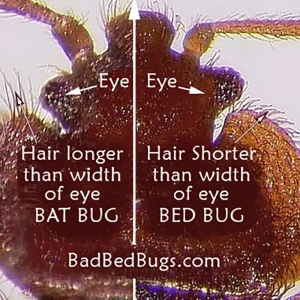
Bat bugs and bed bugs look very similar at a glance. Both are small, flat, oval insects with a reddish brown color, which is why people mix them up. The clearest physical difference is the hair on the upper part of the thorax. On a bat bug, those hairs are longer than the width of the eye. On a bed bug, the hairs are shorter and much less noticeable.
Their host preference is also different. Bat bugs prefer bats, while bed bugs prefer humans. That matters because the bug’s hiding place usually follows the host. Bat bugs are more often found near attics, wall voids, chimney areas, or rooms next to a bat roost. Bed bugs are usually found close to mattresses, box springs, bed frames, couches, and other places where people rest for long periods.
Bat bugs can bite humans, but usually only when their bat host is gone or no longer easy to reach. That is why people often notice them after bats have been excluded, moved, or died inside part of the home. If you are seeing bugs mainly near sleeping areas with no sign of bats, bed bugs are more likely. If you are finding similar bugs near the attic, upper walls, or rooms below a bat colony, bat bugs become much more likely.
To tell which one you actually have, use both clues together. First, look at the insect itself, especially the thorax hair under magnification. Then look at where the bug was found and whether bats are present in or around the house. The combination of appearance, host, and location usually gives you the right answer before you start treatment.
What to do if you have bat bugs
If you confirm bat bugs, the first step is dealing with the bats, not just treating for the bugs. Bat bugs usually keep coming back as long as a bat colony is still living in the attic, chimney, walls, or another part of the home. Long-term control depends on humane bat removal or exclusion first, then sealing entry points and cleaning the roost area if needed. Treating the bugs without addressing the bats may help for a short time, but it usually will not solve the problem for good.
Note: Bats are essential; PLEASE DO NOT kill them. Austin Bat Hospital has detailed information and diagrams on how to get rid of bats without harming them. Bats don’t like these bugs any more than we do.
If you confirmed bed bugs rather than bat bugs, our guide on how to get rid of bed bugs walks you through the next steps in the right order.
Reader stories: when the bugs came from the attic
Two condensed reader accounts that show why this page exists.
Janet’s twenty-two year lesson
When Janet bought her house, it came with fleas, then bed bugs, then soft ticks, and no amount of spraying settled it. A bat specialist found the real answer roosting in the attic: get bats, and you can get all three of their hangers-on. Removing the bats ended every one of those problems at once. Years later a botched roofing job let bats back in, and with them came the bites again, this time identified as bat bugs. Same source, same fix: the treatment starts at the roofline, not the bedroom.
Cherie’s ceiling light
Eighteen days into life in a 1948 bungalow, Cherie’s son caught fifteen adult bugs in his bed, in a room flanked by attic crawl spaces. Treatment money went out the door before anyone noticed the bugs were dropping from the recessed light fixture above the bed, and the company came back with the question that changed the plan: are these bed bugs, or bat bugs? Under a microscope they are nearly twins, but the difference decides everything, because spraying the bedroom cannot fix a colony feeding on bats overhead. If your bugs seem to come from the ceiling, walls, or fixtures, identify before you treat.