Bed Bug Mattress Cover
If bed bugs are hiding in your bed, you do not need to throw your mattress away, but you do need to seal it the right way. A bed bug mattress cover can trap bugs inside, help stop bites at night, and force them to hide somewhere easier to treat.
If you already have bed bugs in your mattress, you may not need to throw it away. A full encasement can help contain bugs that are already inside and make the bed easier to inspect, but it works best as part of a larger treatment plan, not by itself.
Types of Bed Bug Mattress Covers
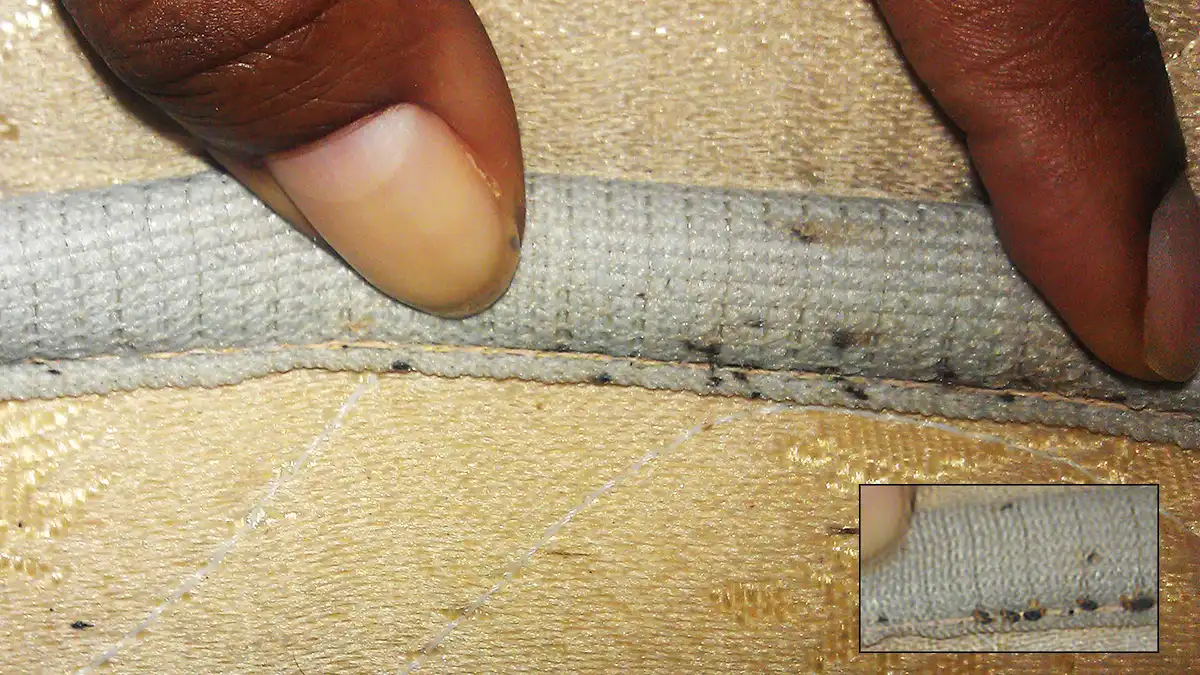
Mattress seam showing bugs and their feces. A bed bug mattress cover will protect you from being bitten and help starve them to death.
A bed bug mattress encasement is designed to fully enclose your mattress, creating a protective barrier that prevents bed bugs from entering or escaping. These covers are typically made from high-quality, tightly woven fabrics that are breathable and resistant to bed bugs. In addition, they usually feature a secure zipper closure to ensure a tight fit.
Make sure there are no gaps when you zip up the mattress cover and that it seals completely at the zipper stop. Bugs will take advantage of tiny gaps to escape and feed. Focus on plain practical features such as a full encasement, a zipper that locks down tightly, and fabric that can handle repeated washing.
Bed bug mattress protectors are similar to encasements but provide a slightly lower level of protection. They typically cover only the top and sides of your mattress, exposing the bottom. Protectors are often made from waterproof materials to protect against spills, stains, and bed bugs.
Choosing the Right Cover
When selecting a bed bug mattress cover, choosing one made from a durable, high-quality material is essential. Look for covers made from tightly woven fabrics, such as polyester or polypropylene, which can prevent bed bugs from penetrating the cover.
A cover is only useful if the fabric and zipper do not leave a path for bugs to feed through the barrier.
Skip noisy vinyl covers if you can. A quieter breathable encasement is usually easier to live with for the long stretch that bed bug treatment takes. Look for:
- Choose a full encasement, not a fitted-sheet style cover.
- Look for a zipper that seals tightly and holds up after repeated washing.
- Pick a fabric that is breathable, quiet, and machine washable.
- If you want extra reassurance, look for independent testing or certification for bed bug protection.
Remember, there is no use encasing your mattress if you are not going to seal your pillows – bed bugs love pillows.
Look for mattress covers that have been independently tested and certified for bed bug protection. Certifications such as the Entomology Laboratory’s Bed Bug Certified seal indicate that the cover has undergone rigorous testing and is effective against bed bugs.
How to Install a Bed Bug Mattress Encasement
Installing a bed bug mattress encasement is a relatively simple process. Follow these steps for a smooth installation:
- Remove any bedding from your mattress. This includes sheets, mattress toppers, and pillowcases.
- Inspect your mattress for any signs of bed bugs, and treat the infestation if necessary.
- Carefully unfold the mattress cover, ensuring it is the correct size and orientation.
- Starting at one end of your mattress, slide the cover over it, pulling it up and over the sides as you go. Cover the entire mattress, including the bottom, if you have an encasement.
- Once the cover is in place, securely zip the closure to create a tight seal.
- Replace your bedding and enjoy a more peaceful, bed bug-free sleep.
Cleaning and Maintenance
To keep your bed bug mattress cover in optimal condition, clean and maintain it regularly.
Bed bug mattress encasements should be cleaned at least every two to three months to ensure they remain effective. You can machine wash and dry your cover on low heat, but always consult the manufacturer’s care instructions to avoid damaging the cover.
In case of a bed bug infestation, it’s crucial to deep clean your mattress cover to eliminate any remaining bugs or eggs. First, remove the cover from your mattress and wash it in hot water (at least 120°F or 49°C) to kill any bed bugs. Then, dry the cover on high heat to ensure all bugs and eggs are eradicated.
A bed bug mattress cover can help protect the bed and make inspections easier, but it works best alongside the rest of your treatment plan.
What to Avoid in A Mattress Cover
A mattress cover can help trap bugs and protect your bed, but it is only one part of the solution. Read our complete removal guide to see what else you need to finish the job.