Bed Bug Life Cycle
The bed bug life cycle matters because bed bugs do not stay in one form, and eggs or young nymphs that survive can restart an infestation after treatment. A bed bug develops from egg to five nymph stages to adult, and each nymph must take a blood meal before molting to the next stage. Under good conditions the full cycle can move quickly, which is why treatment usually needs follow-up instead of a single pass.
7 Stages of a Bed Bug’s Life Cycle
Bed bugs (Cimex lectularius) go through several stages in their life cycle, including egg, five nymphal steps, and adult. The entire process from egg to adult can last from several weeks to several months, depending on the temperature and availability of food. Below are the different stages in the bed bug life cycle.
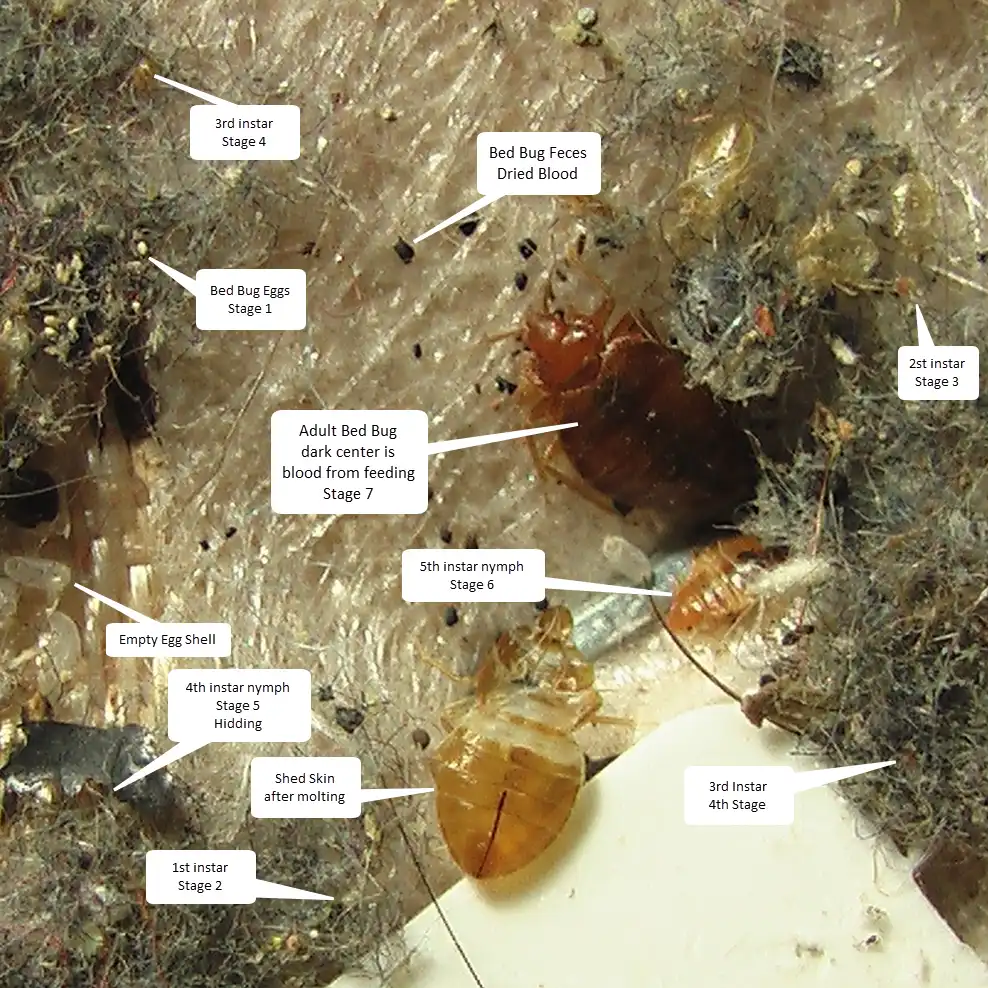
Photo showing the 7 stages of a bed bug life cycle
Stage 1 is the Bed Bug Egg:
Bed bug eggs are tiny, white, and oval-shaped, about the size of a pinhead (about 1mm in length). The female bed bug can lay hundreds of eggs in her lifetime, in batches of 10 to 50, usually in cracks and crevices. These eggs are coated with a sticky substance that helps them adhere to surfaces and protect them from predators.
The eggs hatch within 6 to 10 days, depending on temperature and humidity.
Stage 2 is the First instar nymph:
After hatching, the bed bugs emerge as first instar nymphs. They are tiny, usually only about 1.5 millimeters long, and are pale white or translucent. They need to feed on blood to grow and molt to the next stage.
The first instar nymph has six legs and can move around actively. It feeds on the blood of a host, usually a human, by piercing the skin and withdrawing blood through its mouthparts. After feeding, the nymph will become engorged, and its body will become more visible.
The nymph will molt and shed its skin as it grows. It will continue to molt and develop through additional instars before reaching maturity as an adult bed bug. The first instar stage usually lasts about a week, depending on temperature and food availability.
Stage 3 is the Second instar nymph:
By the second instar, the nymph is a little larger and easier to see than it was right after hatching. It is still very small, usually about 2 to 3 mm long, but the body starts to look more solid and less translucent than the first stage.
What changes most here is size, color, and feeding ability. After one molt, the bug looks slightly darker and sturdier, and it still needs another blood meal before it can continue growing. At this point it is still immature, but it is becoming harder to miss if you are inspecting seams, folds, and tight hiding spots.
Stage 4 is the third instar nymph:
The third instar nymph is noticeably larger again, often around 3 to 4.5 mm long. The body shape is still flat and oval, but the bug now looks more clearly like a young bed bug instead of a tiny pale speck.
Another change at this stage is mobility and toughness. Third instar nymphs can travel farther to feed, hide more effectively after feeding, and survive longer without a meal than the earlier stages. They are still not adults, but they are much more established than the first two nymph stages.
Stage 5 is the Fourth instar nymph:
By the fourth instar, the nymph is close to full size and begins to resemble an adult bed bug at a quick glance. It is usually about 4.5 to 5.5 mm long, with a flatter, broader body and a darker brown color, especially after feeding.
What makes this stage different is that the bug is now more developed but still not fully mature. It continues feeding, hiding, and molting like the earlier stages, but it is now approaching the final stage before adulthood. If you are finding bugs of this size, the infestation is no longer in its earliest phase.
Stage 6 is referred to as the Fifth instar nymph:
The fifth instar is the last nymph stage before adulthood. At this point, the bug looks very similar to an adult bed bug, but it is still slightly smaller and not yet able to reproduce.
This stage matters because one more blood meal and one more molt can turn the nymph into a fully mature adult. The body is reddish-brown, flat, and clearly segmented, and the insect is large enough to be easier to spot than the younger nymphs. Once it molts again, it moves into the adult stage and the infestation becomes harder to control because reproduction can begin.
Stage 7, the final stage:
After the fifth and final molt, the bed bug becomes an adult. Adult bed bugs are reddish-brown and about the size of an apple seed. They are fully developed and able to mate and reproduce.
They have a flat, oval-shaped body and are reddish-brown. Adults have six legs and two antennae, covering their bodies with tiny hairs.
Adult bed bugs feed on the blood of humans and animals and are usually active at night when their hosts sleep. They can live for several months without feeding but typically feed every 5-10 days. An adult bed bug can produce eight eggs per time and as many as 500 eggs during her lifetime! Studies show that an adult male can live up to a year without blood at 50F and only a month at 80F, which suggests bed bugs die faster in warmer temperatures when starved.
One way to distinguish adult bed bugs from other similar insects is by their characteristic biting behavior. Bed bugs typically bite in a line or cluster pattern, and their bites can cause red, itchy welts on the skin.
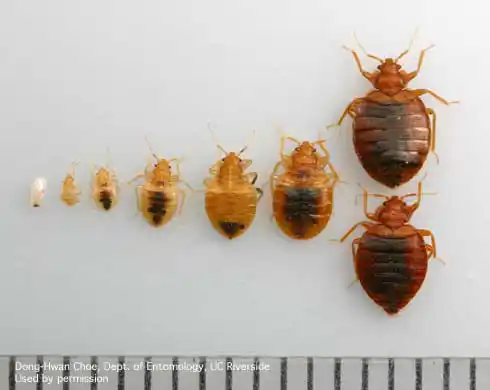
Shown below is a picture from Dong-Hwan Choe at University of California Statewide Integrated Pest Management Program on bed bugs the bed bug at different stages of development (Egg, 5 nymphal stages, and 2 adult bed bugs).
What do bed bugs look like in different environments? Check out pictures submitted by our visitors over the last decade.
Now that you have seen how bed bugs grow from eggs to adults, our guide to getting rid of bed bugs at every stage can help you time your treatment, follow up correctly, and avoid missing newly hatched bugs.